Translate

Showing posts with label Assessment. Show all posts

Monday, 12 January 2015

The Key to Student Achievement


Teachers often don't agree on issues of pedagogy.

That said, all teachers would probably admit that feedback is a good thing. Feedback comprises the core of formative assessment. It is one of the most powerful influences on student achievement. But what does good feedback look like? It is one of those educational terms that is often difficult to define and put into words. Feedback is usually thought of as advice, praise and evaluation. In general though, it is information about how we're doing in an effort to reach our goals. It is descriptive not evaluative. It is a continuous process that is given consistently throughout the year. Some simple questions that can be used to communicate with parents and guide feedback are:


What can the student do?
What can't the student do?
How does the student's work compare with that of others?
How can the student do better?


Balanced - Mix the positive and the negative.
Providing feedback means giving students an explanation of what they are doing correctly and incorrectly. However, the focus of the feedback should be based essentially on what the students is doing right. It is most productive to a student’s learning when they are provided with an explanation and example as to what is accurate and inaccurate about their work. Use the concept of a “feedback sandwich” to guide your feedback: Compliment, Correct, Compliment.

Timely - Don't wait too long. 
When feedback is given immediately after showing proof of learning, the student responds positively and remembers the experience about what is being learned in a confident manner.  If we wait too long to give feedback, the moment is lost and the student might not connect the feedback with the action. The most useful feedback is therefore often verbal. 

Kind - Be sensitive to the individual needs of the student.
Our feedback should be 'hard on content, soft on people'. It is vital that we take into consideration each student individually when giving feedback. Our classrooms are full of diverse learners. Some students need to be nudged to achieve at a higher level and other needs to be handled very gently so as not to discourage learning and damage self-esteem. A balance between not wanting to hurt a student’s feelings and providing proper encouragement is essential.

Specific - Give details and plan of action. 
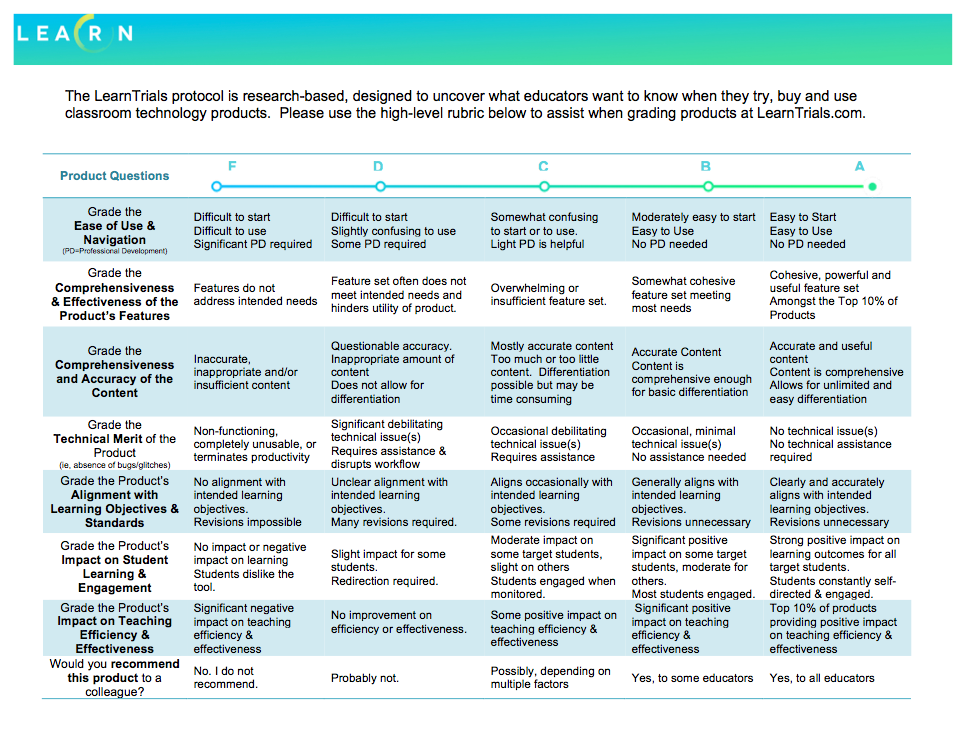
Saying "good job" is not feedback! General praise and comments are not effective ways to help students improve. It must not be vague or ambiguous. Try to include examples to illustrate your statement. This is when rubrics become a useful tool. Effective rubrics provide students with very specific information about their performance, comparative to an established range of standards. 

Limited - Concentrate on one ability. 
It makes a far greater impact on the student when only one skill is critiqued versus the entire paper/assignment being the focus of everything that is wrong. Too many instructions are overwhelming. It's more likely that the student will improve when one piece of advice is offered at a time. Start with something small and slowly work towards the larger issues of concern. 

Personal - Have a one-on-one conference.
Providing a one-on-one meeting with a student is one of the most effective means of providing feedback. The student will look forward to having the attention and allows the opportunity to ask necessary questions.  A one-on-one conference should be generally optimistic, as this will encourage the student to look forward to the next meeting.

Friday, 9 January 2015

The Right Question

Questions create the challenges that make us learn.

Teachers spend much of their time asking questions. We need to ensure that we are asking the right kind that spark learning. Initiation-Response-Evaluation (IRE) questioning, the 'guess what's in the teacher's head' style, should be avoided whenever possible. We need to provide questions that do more than simply require students to recite what's been learned. Questions that make students really think and not just report someone else's thinking. Good questions will create deeper understanding and advance cognitive development. They can't be answered quickly and easily. They encourage learners to make links with prior knowledge and push them to the limit of their understanding. A strong question should lead to more questions. It should evoke reflection. When inquiring, it's important to make it clear to students what type of thinking they are expected to do. This clarity will assist with our assessment of their learning.

Let's take the time to ask the right questions.

As a famous man once said, "If I had an hour to solve a problem and my life depended on the solution, I would spend the first 55 minutes determining the proper question to ask."

The following three question types provide a framework for prompting students:


Clarify
-What did you mean by...?
-Can you explain that differently?
-What other words could you use?

Probe
-Can you tell me more about...?
-What else do you know about...?
-How else might you use that?

Recommend
-What is better about?
-Can you explain why you prefer that?
-What do you agree with...?
-

Tuesday, 25 November 2014

Buzzmath - Engaging Practice

Buzzmath is a great 1-to-1 middle school math tutoring program that provides rich activities, instructional support and data management to track students' progress. It was designed by a company from Montreal, so the units are aligned with Canadian Math standards. There are on-demand examples and solutions  for every practice activity. There is also a built-in calculator for students to use. https://www.buzzmath.com/


The students in my class have really enjoyed Buzzmath. The site uses a star & medal reward system that motivates them to build up their points and excel to the next level. It is a very engaging program that is easy-to-use and fun. It is a great way to assess their understanding. In our class, students spend about 3 periods per week working through the different units to reinforce the concepts they are learning. Many of the students have been using it at home as well. 


Wednesday, 19 November 2014

Educreations - Student as Teacher

Educreations is an app that turns the iPad into a recordable, interactive whiteboard for creating Khan’s Academy-style tutorials, lessons, or stories. It’s both a teaching and learning tool, allowing users to create lessons and browse what others have created. It’s very simple to use and intuitive, requiring very little time to learn, and created videos can be used by anyone via iPad or computer. Educreations can be used either as a pedagogical tool in flipped or distance-learning classrooms or as a platform for student exhibition, allowing students to demonstrate learning, craft presentations, and teach each other.


This activity emphasizes the skill and art of planning by using Educreations to put students in the role of teachers. After researching a topic of interest, each student will devise an engaging method for sharing his or her knowledge with the class in a video medium, breaking down the steps to understanding a concept in an easy-to-follow format. This can also be used as a form of summative assessment because students must be masters of the material to effectively communicate the content and answer any questions posed by the teacher and fellow classmates. By sharing and storing these video lessons, students will feel a sense of ownership and accomplishment. Additionally, they will learn from their peers' expertise by participating in each others' lessons.

Step 1: Students sign up in pairs for a chapter or topic of interest. Step 2: Students conduct research on their topics. Step 3: Students draft lesson plans, learning objectives, and overarching structures of their lessons. Step 4: Students write, narrate, and create the video footage for their Educreations video lessons. Step 5: Students can share and present their video lessons, then archive them for future classes.

Source: http://educade.org/lesson_plans/turn-students-into-teachers-with-educreations
Source: https://www.youtube.com/watch?v=3Ye54chqOWQ

Wednesday, 12 November 2014

Tuesday, 4 November 2014